Energy Storage Solutions (BESS)
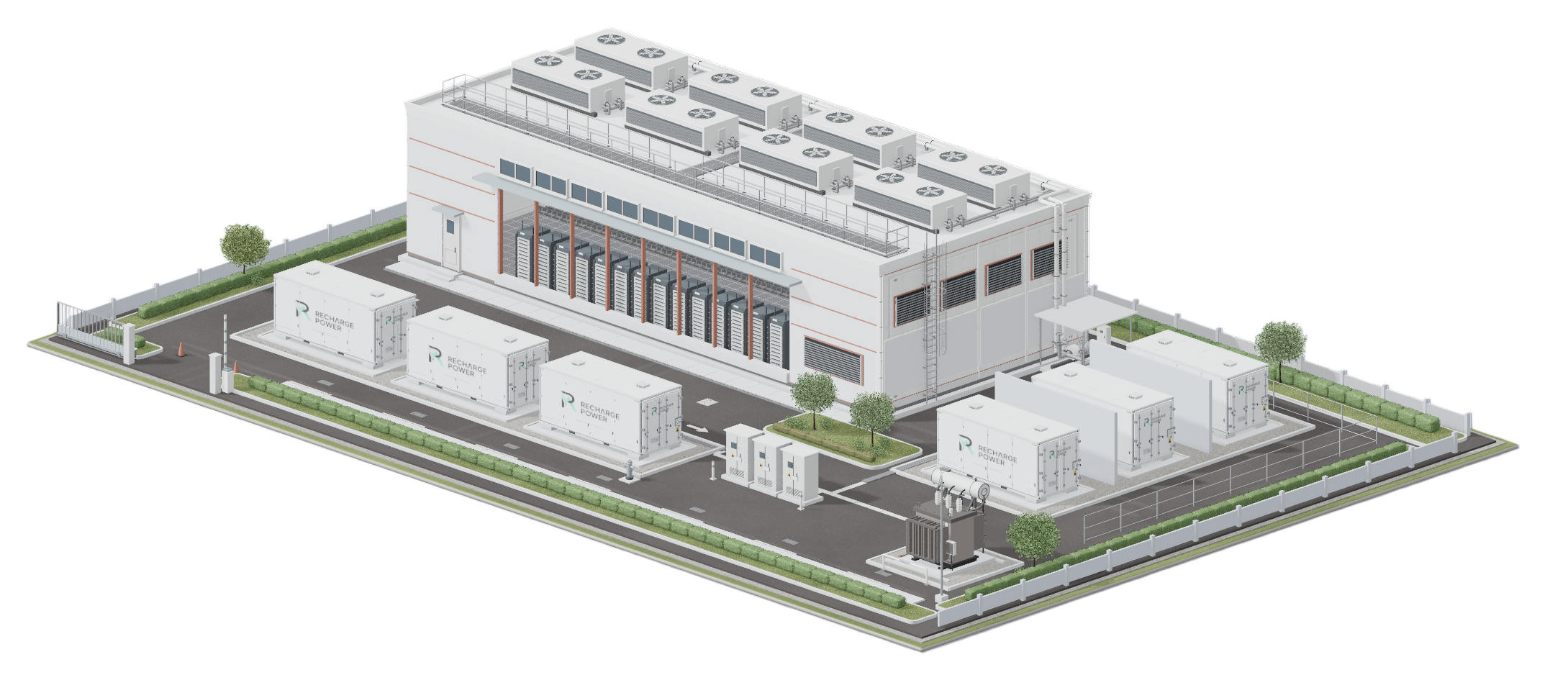
Grid-Scale Storage(Grid-Scale BESS)
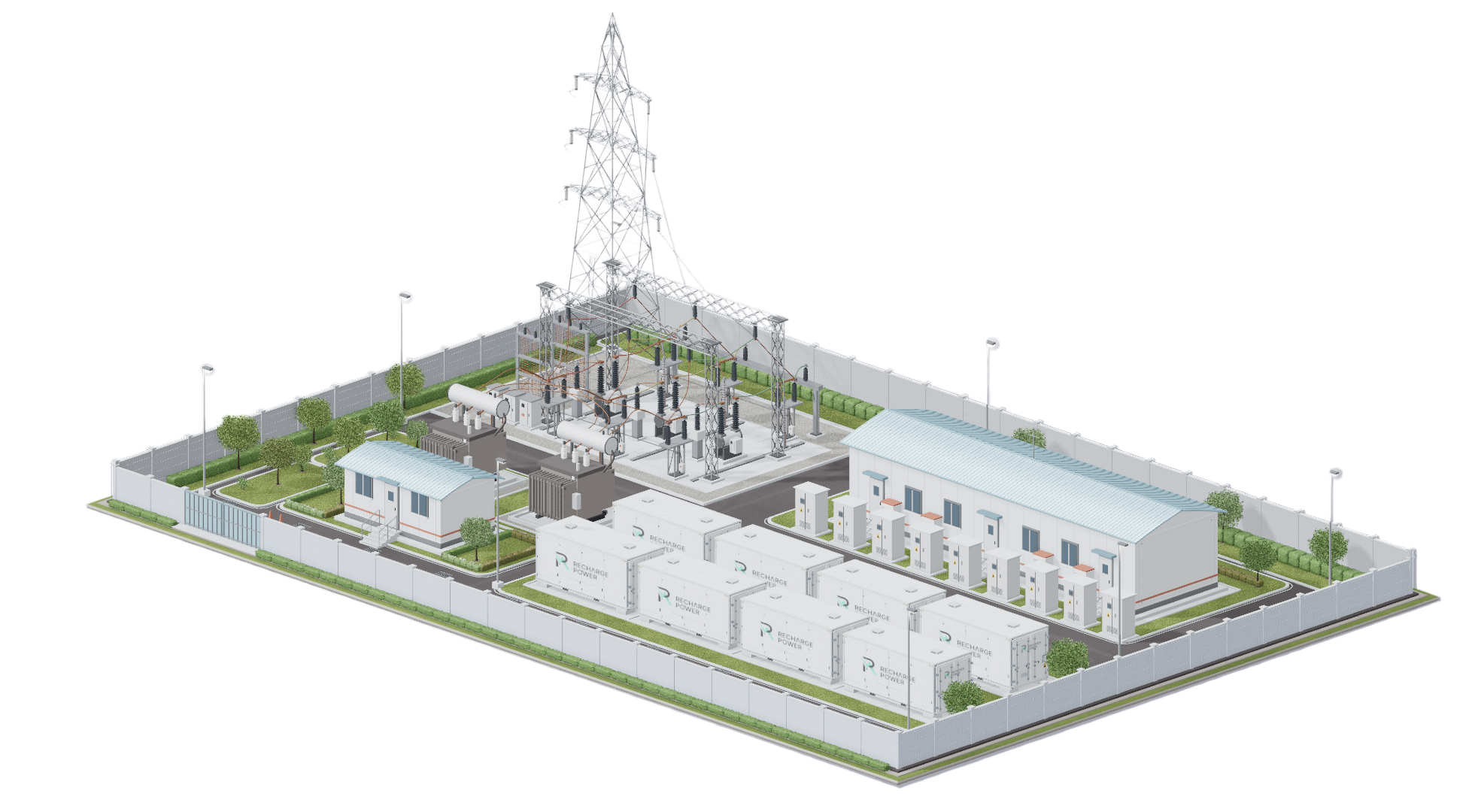
Built around grid conditions and operating goals, integrating storage, power conversion, step-up distribution and controls, with power, capacity and protection planned to support dispatch.
Commercial & Industrial Storage(Behind-the-Meter / C&I BESS)
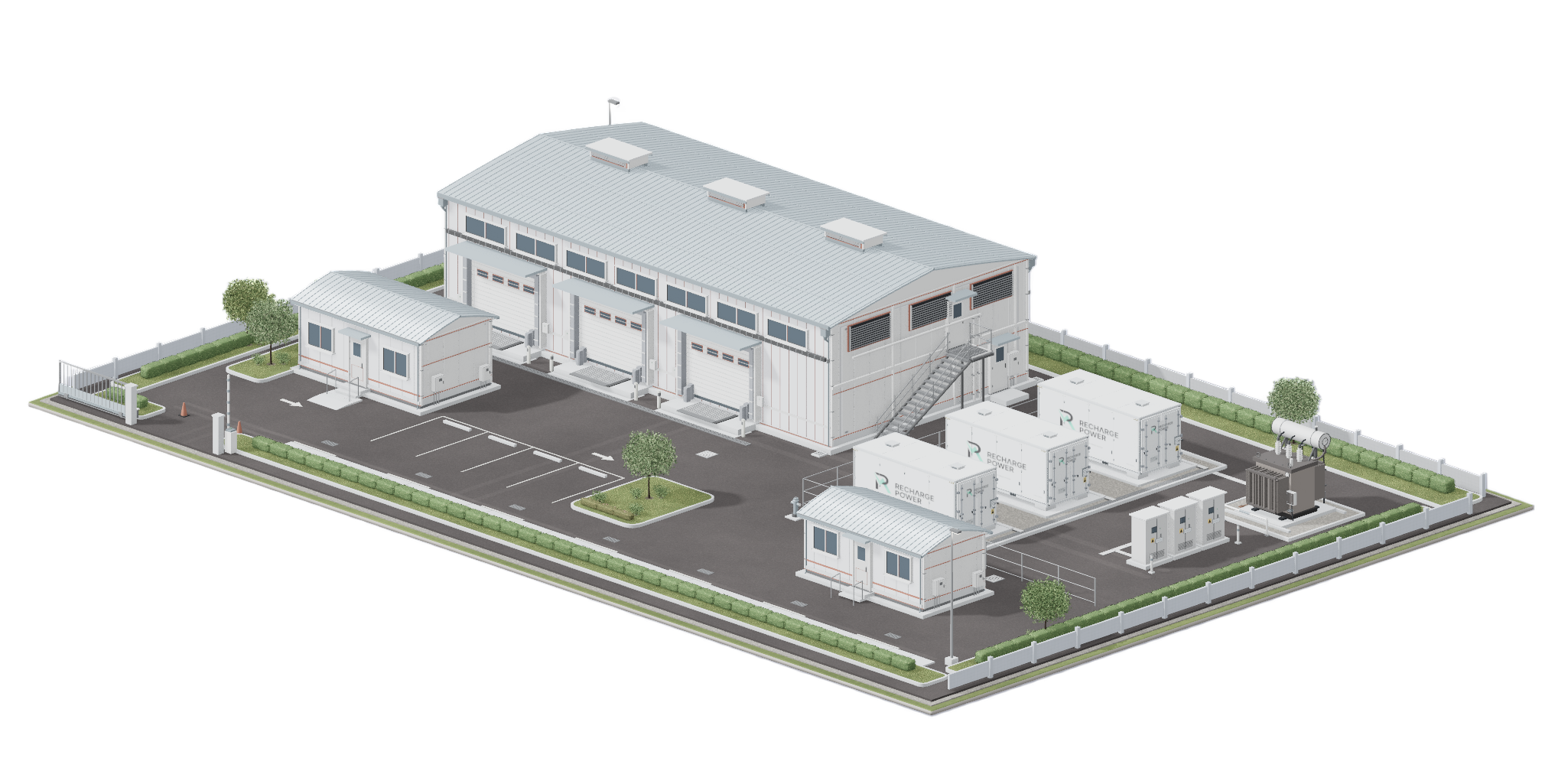
Sized to your load and backup needs, with demand management and peak/off-peak dispatch tied into on-site equipment to raise energy efficiency.
Solar + Storage(PV + BESS)
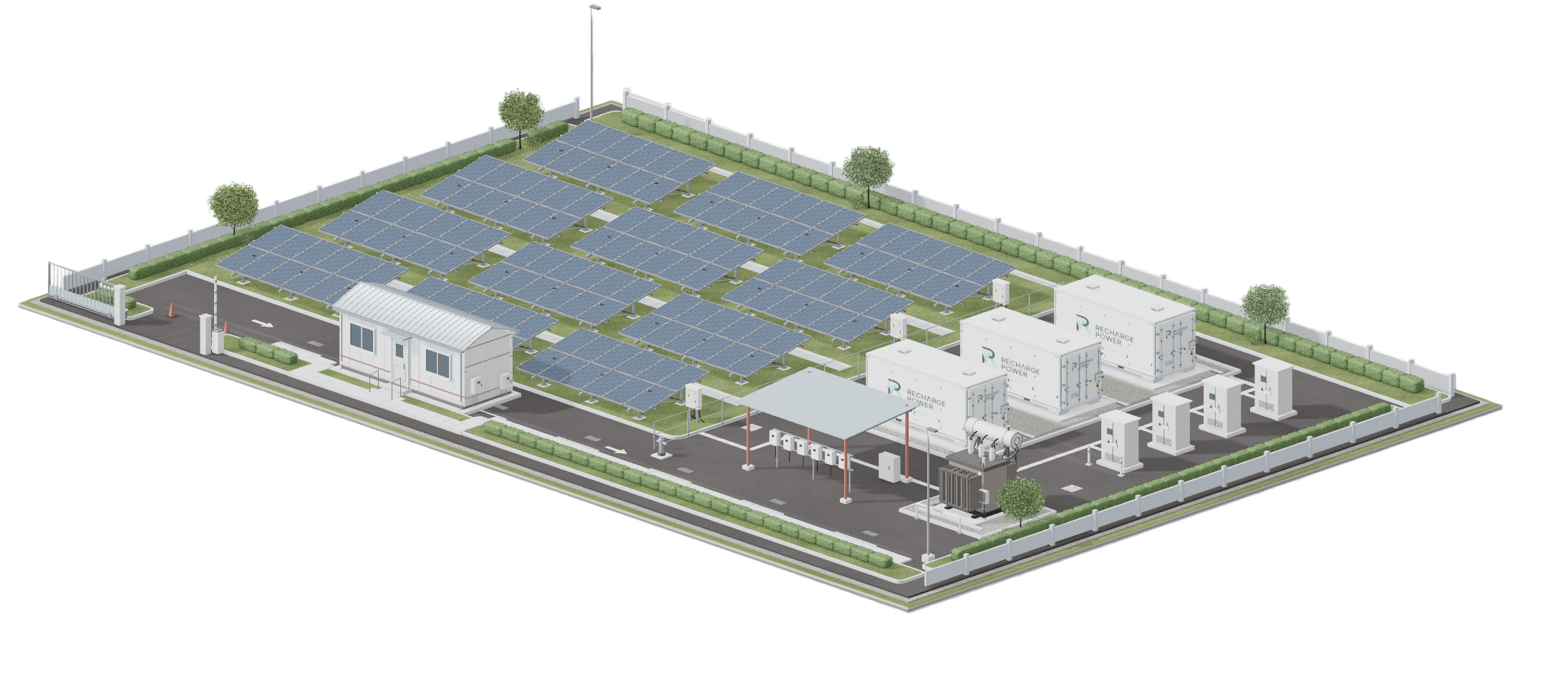
Integrating solar PV, storage and charging to balance renewable generation with on-site demand, raising self-consumption and dispatch flexibility.
Microgrids(Microgrid BESS)
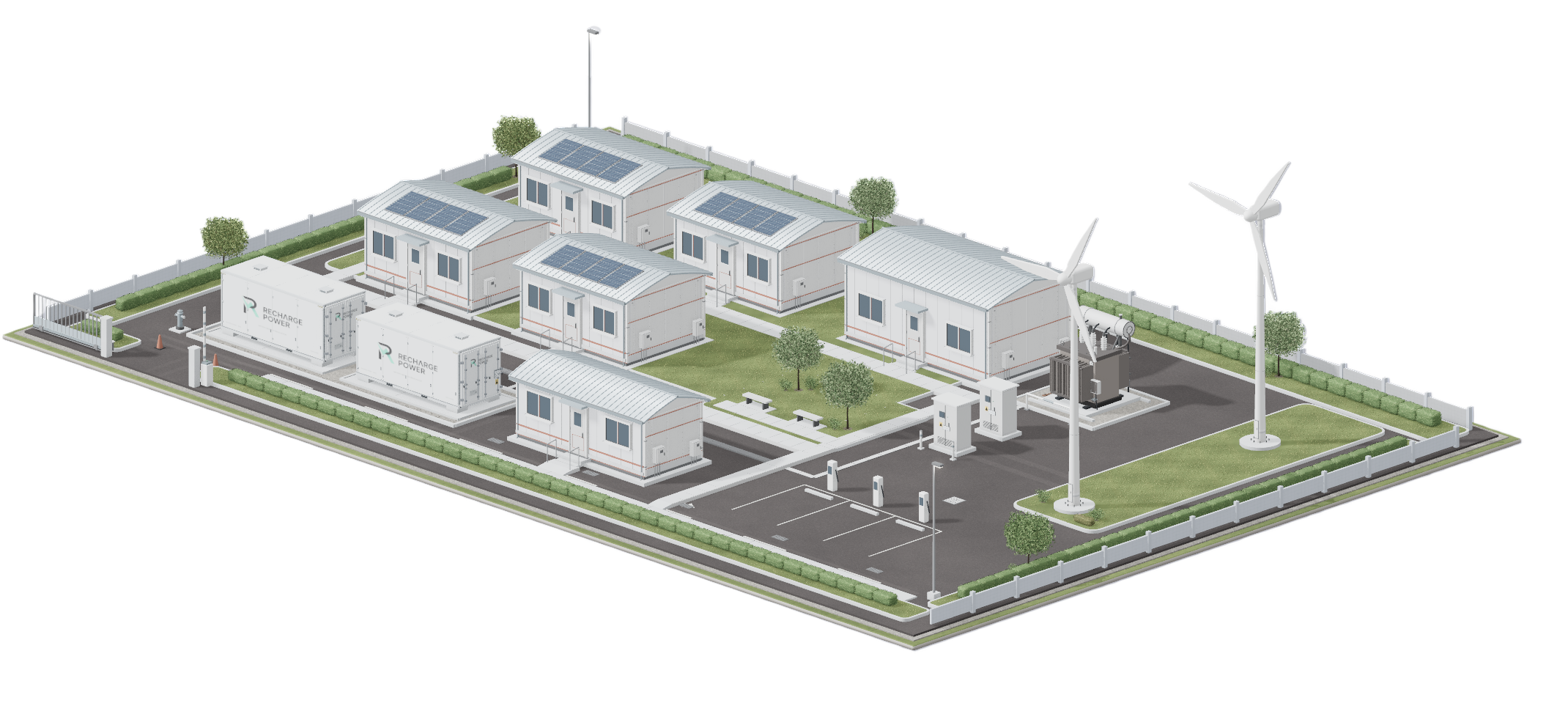
Integrating distributed generation, storage and energy management to coordinate on-grid and off-grid operation for campuses, communities and critical sites.
AI Data Center Storage(AI Data Center + BESS)
For high-density computing and critical loads, integrating storage, power conversion and backup to shave demand peaks and keep supply continuous.
GRID-SCALE BESSGrid-Scale Storage
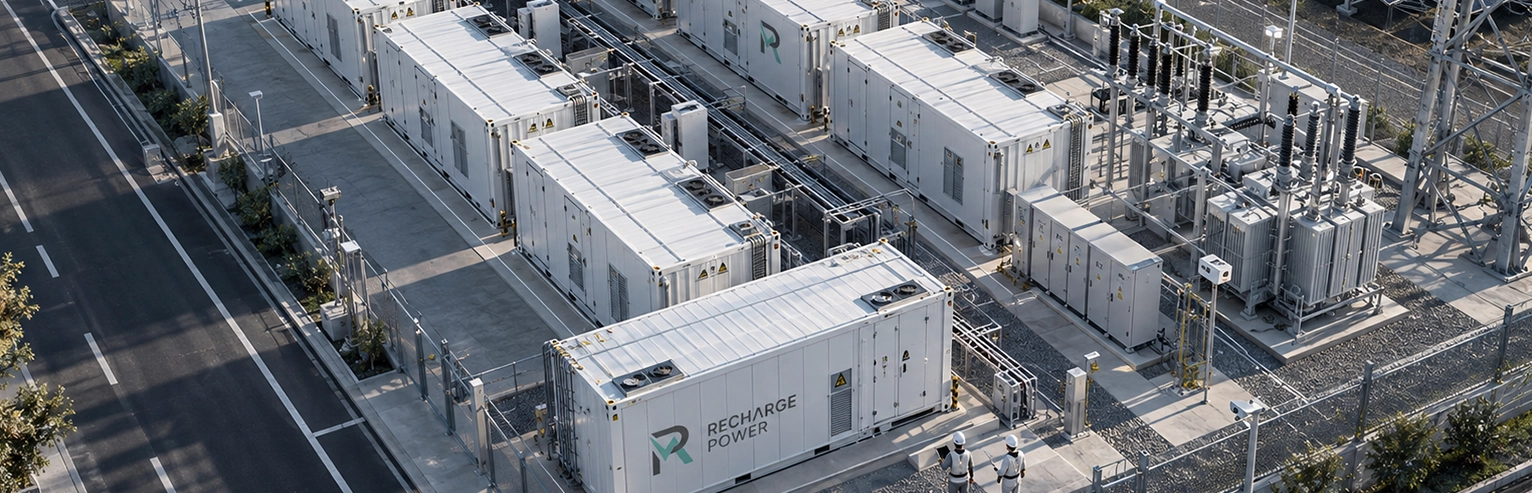
Strengthening grid resilience and keeping supply and demand in balance, in real time.
With large grid-scale battery energy storage systems at its core, Recharge Power delivers a one-stop service shaped by each site's conditions, feeder capacity and electricity-market needs: capacity planning, BESS integration, control-system development, civil and electrical works, fire-safety design and grid-connection testing, through to ongoing O&M and energy-market operation. The fast charge and discharge of storage supports frequency regulation, energy shifting, spinning reserve, peak-load shifting and voltage control, helping the grid stay balanced and stable as the share of renewables grows.
Starting from the site survey, we handle MW/MWh sizing, battery and PCS integration, EMS control strategy, SCADA/HMI communications, transformer and HV/LV equipment integration, feeder and grid-connection applications, civil works, fire protection, commissioning and Taipower testing. After commercial operation, sites are managed through 24-hour monitoring, equipment maintenance and our qualified-trader services.
Our Zhongli site was among Taiwan's first AFC grid-scale storage projects; the 20 MW / 33 MWh Luyuan project is Taipower's first self-built storage installation; and at Lize, Yilan, we built two 100 MW-class systems covering dReg, E-dReg, spinning reserve and voltage control.
BEHIND-THE-METER / C&I BESSCommercial & Industrial Storage
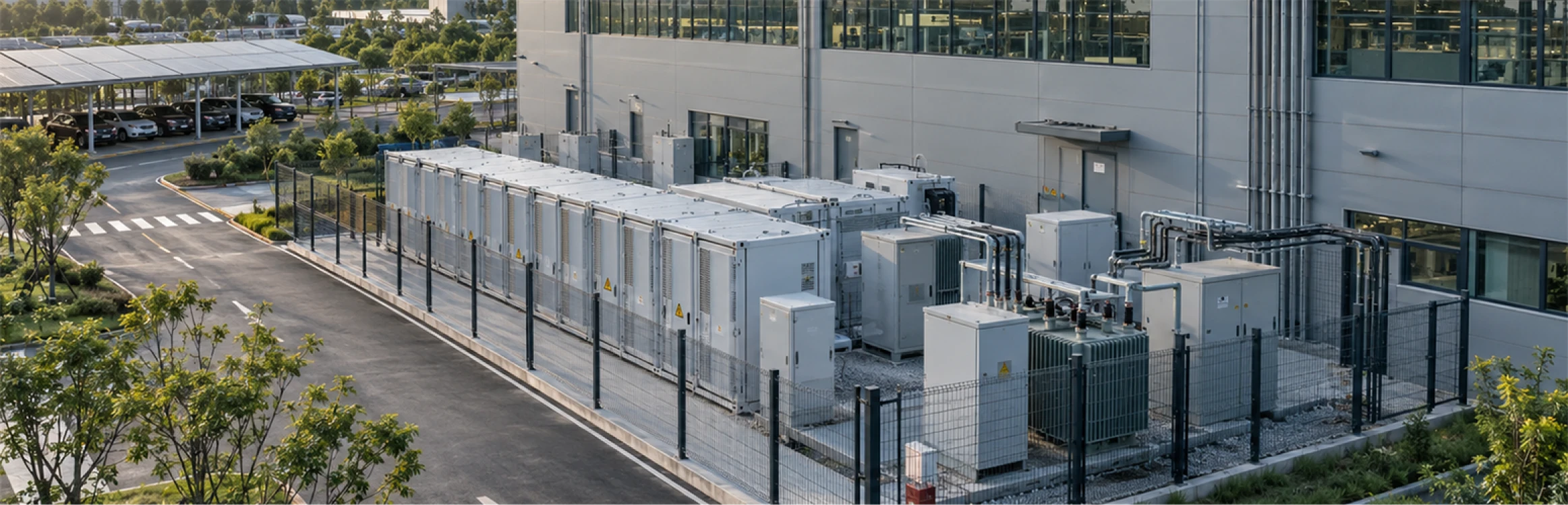
Energy storage that keeps pace with how your business uses power.
Starting from load profiles and power needs, we assess storage capacity and charge/discharge strategy, integrate customer-side distribution, metering and energy management, and coordinate power use during peak hours.
Sized to your load and backup needs, with demand management and peak/off-peak dispatch tied into on-site equipment to raise energy efficiency.
Planning focus: load analysis, peak demand management and charge/discharge strategy.
PV + BESSSolar + Storage
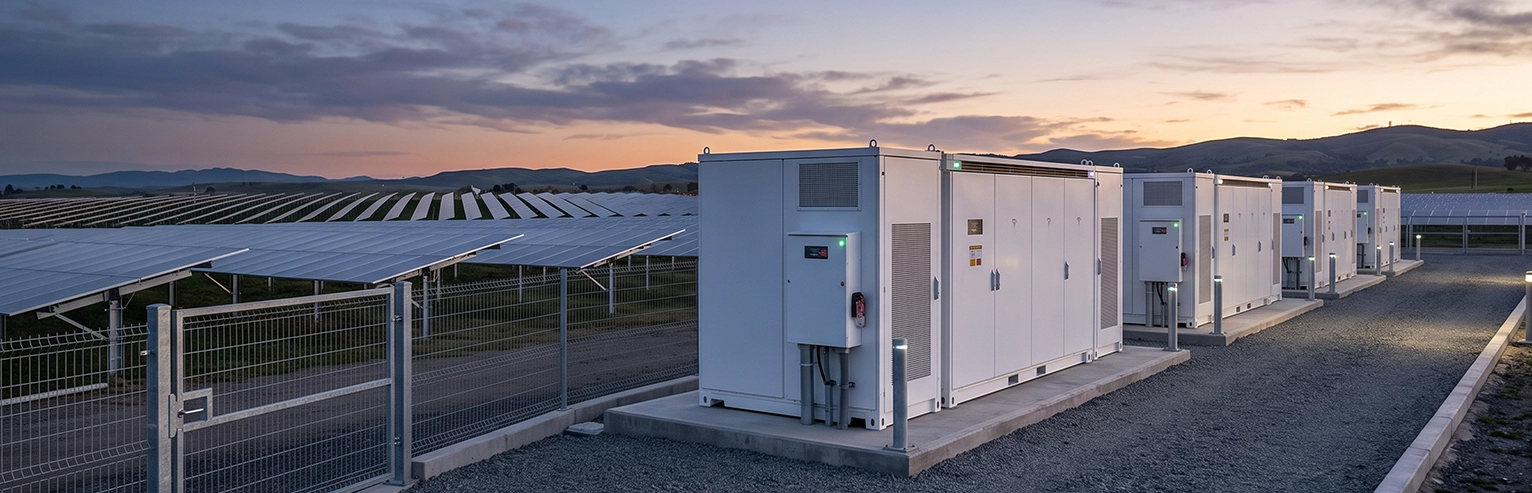
Renewable energy that is not only generated, but stored, managed and dispatched.
PV + storage integrates a solar PV system with a battery energy storage system, with an EMS managing generation, storage and grid-export power together. When sunshine is strong and PV output is high, energy is stored in the batteries; when grid demand rises, sunlight fades or at set times, it is released, shifting energy and shaving peaks. The regulating capability of storage reduces the intermittency of solar output, turning renewables from an uncontrollable source into a more predictable, dispatchable energy resource.
What Recharge Power delivers: matching solar generation curves to storage capacity, PV/PCS/BESS electrical architecture, EMS control strategy, charge/discharge scheduling, grid-export limits, emergency operation control, civil, electrical and fire-protection works, and remote monitoring and maintenance after commercial operation. We also develop our own PV-plus-storage control systems, configuring energy-shifting and abnormal-operation logic for each site.
Reference project: the 6.2 MW / 22.35 MWh Beimen site in Tainan, built for PV + storage and peak shaving, entered commercial operation in February 2024; Recharge Power counts it as Taiwan's first PV-plus-storage site in commercial operation. The company has since continued to win large PV-plus-storage turnkey projects.
MICROGRID BESSMicrogrids
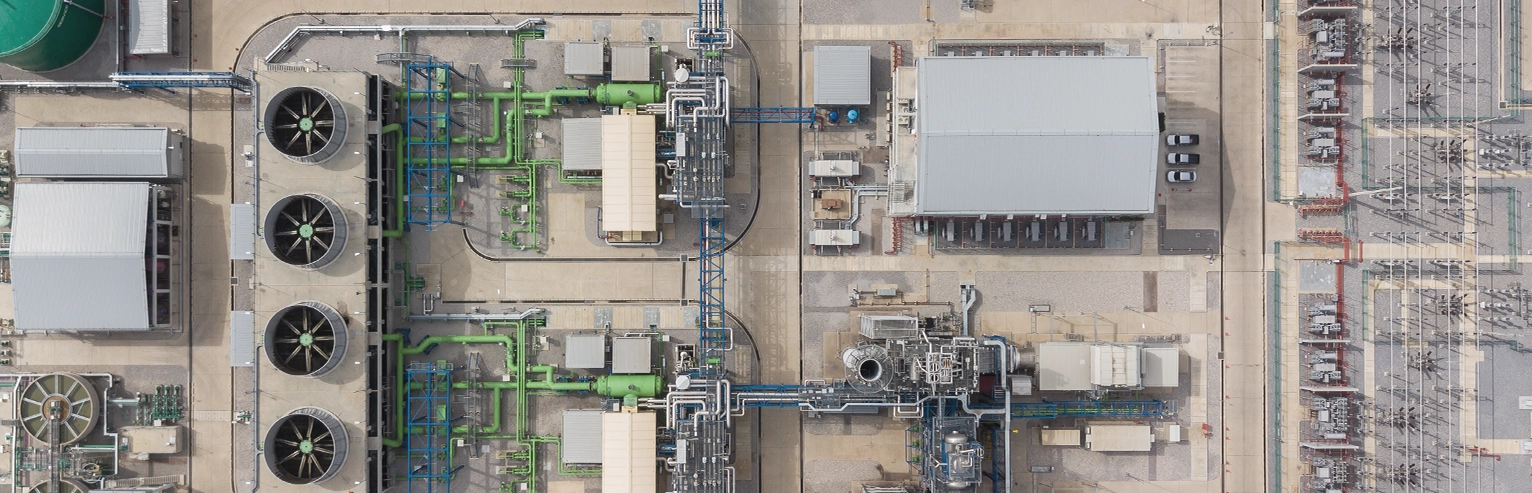
Local energy systems that dispatch themselves and can run independently.
A microgrid brings solar PV, storage, other distributed energy resources, loads and an energy management system into a single power architecture. Normally it runs in coordination with the external grid, with the EMS optimizing dispatch based on generation, demand and storage status. If the external grid fails, it can, depending on the system design, switch to local self-supply, keeping critical equipment and key loads running and raising the energy resilience of campuses, factories, data centers and essential facilities.
Storage is the regulating core of a microgrid: it quickly balances fluctuations between renewables and load and, together with voltage, frequency and power control, lets multiple distributed resources work as one system. At its 2026 investor conference, Recharge Power named “advanced applications and microgrids” as its next phase of development, integrating distributed generation, storage and EMS to build more self-reliant power environments.
Where the technology goes next: beyond our existing EMS, BESS and power-control capabilities, public disclosures indicate that advanced applications such as grid-forming storage and Grid Booster will follow, so storage no longer just follows the grid but actively supports voltage, frequency and system resilience.
AI DATA CENTER + BESSAI Data Center Storage
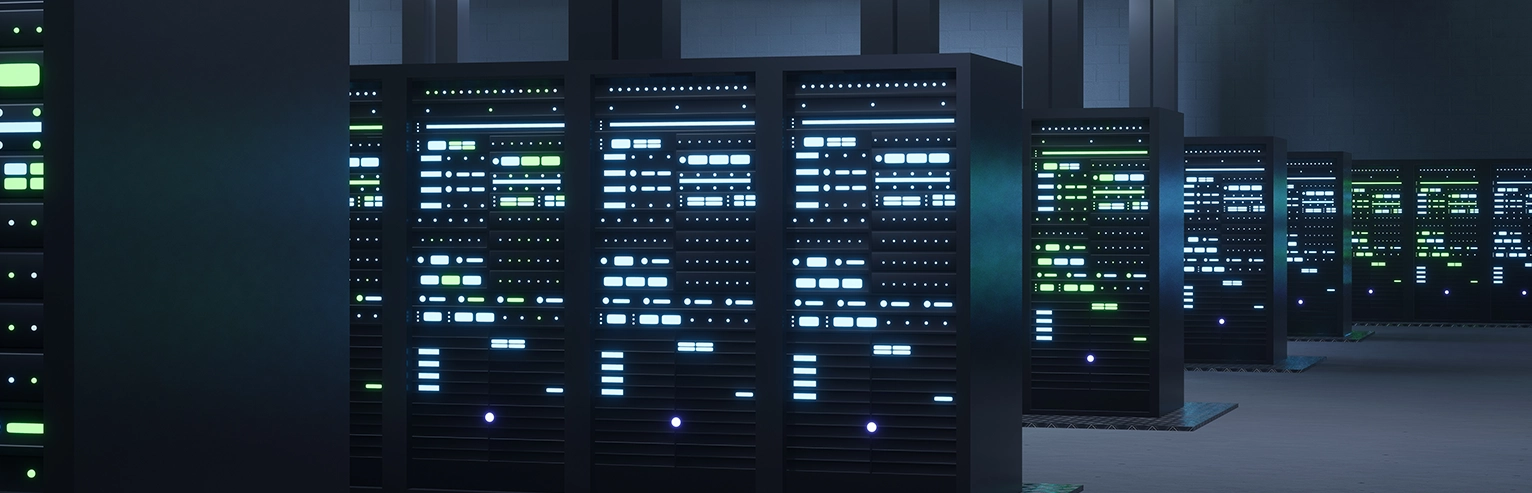
Faster, more stable energy infrastructure for high-density AI compute.
The power profile of AI data centers is changing traditional power infrastructure. When large AI models train or run inference, large numbers of GPUs can jump from low load to full load in an instant, creating highly dynamic transient demand. With fast charge/discharge and power-regulation capability, a BESS acts as an energy buffer between the grid and these dynamic AI loads, supplying power the moment load spikes and absorbing surplus energy when demand drops, reducing the impact of sudden load swings on the site's power system and the regional grid.
How we plan it: first, smoothing AI load shocks, using BESS to respond quickly to GPU power swings; second, storage + local microgrid, integrating on-site generation, storage and energy management to ease pressure on a single grid connection and, where conditions allow, help data centers secure usable power capacity sooner; third, stronger backup, with BESS providing high-power buffering when the external grid fails and carrying critical equipment until other backup sources take over or the grid recovers.
Current status: this is Recharge Power's newest stated growth direction for 2026. As of August 2026, the company says it is in talks with AIDC developers and operators in Taiwan and Japan to select pilot projects, initially around 2 MW or less in Japan and about 2–5 MW in Taiwan, with AIDC + BESS sites expected to start in 2027.